Worldwide Shipping
Currency


PSA vs BGS vs CGC: How the Big Card Graders Differ
One grade, four subgrades or a Pristine 10: how PSA, BGS and CGC read the same 10-point scale in different ways.

In this story
PSA, BGS and CGC all grade trading cards on a 10-point scale and seal each card in a hard plastic holder, but they read that scale in different ways. PSA gives one overall grade, Beckett adds four subgrades and a Black Label, and CGC splits its top grade into Pristine 10 and Gem Mint 10. Knowing those differences tells you what a slab is actually saying about the card inside.
Graded slabs are now live at PUSHAS too, led by the PSA-graded Mega Charizard X ex Special Illustration Rare #125 in the graded cards and slabs collection.
The cards inside sealed boxes are the ones collectors send for grading, which is why a box like the Pokémon TCG Mega Charizard X ex Ultra Premium Collection is where many graded cards begin. Sealed product is live now in the trading cards range at PUSHAS.
PSA: one number, set by the original
Professional Sports Authenticator was created in 1991 and is based in Southern California. PSA describes itself as the grading service that receives more collectibles than any other, and hobby coverage calls it the largest third-party authenticator in the industry. That reach is the core of what PSA is known for: its grades are the reference point many collectors use when they talk about condition.
PSA grades on a scale from 1, Poor, to 10, Gem Mint, and uses half-point grades within that range. There is no PSA 9.5; the step above Mint 9 is Gem Mint 10. PSA gives one overall grade rather than a breakdown of separate categories. Every PSA slab carries a label with the grade, the card details and a certification number that can be checked through PSA's online verification.
BGS: four subgrades and the Black Label
Beckett Grading Services is the grading arm of Beckett, the publisher long known for its hobby magazines. Beckett grades from 1, Poor, to 10, Pristine, in half-point steps, so a BGS 9.5 Gem Mint is a real grade on the Beckett scale.
What sets Beckett apart is the breakdown. Each card is scored in four categories: centering, corners, edges and surface. Those subgrades sit on the label next to the final grade, so you can see where a card was strong and where it lost ground. A card that earns 10 in all four categories receives the Black Label, a distinct label Beckett reserves for Pristine 10 cards with four perfect subgrades.
Beckett's newer labels also carry a QR code that links to the card's verification page. In December 2025, Collectors, the company behind PSA and SGC, reached an agreement to acquire Beckett, which it says will continue to run as an independent brand.
CGC: Pristine 10 and Gem Mint 10
CGC Cards comes from the same ownership and management behind the CGC comics service, and it grades trading card games, sports cards and non-sports cards. The current brand took shape in July 2023, when CGC Trading Cards and Certified Sports Guaranty combined under the CGC Cards name.
That merger reshaped the top of the CGC scale. CGC now separates two 10 grades. CGC defines a Pristine 10 as virtually flawless to the naked eye, with 50/50 centering. Its Gem Mint 10 is a card that earns a 10 overall but misses one Pristine requirement, with front centering of no more than about 55/45 and reverse centering of no more than 75/25. CGC retired two things in 2023: subgrades, which it said fewer than 5 percent of CGC Trading Cards submissions requested, and the Perfect 10 grade, which cards already graded that way keep.
Where SGC fits
SGC is another established grader, and it is now part of the same Collectors group as PSA. It sits alongside the three above rather than replacing any of them, and the same basic idea applies: one company, one scale, and one label.
Who each grader is built for
| Grader | Built for | Known for |
|---|---|---|
| PSA | Collectors who want one clear overall grade | One overall grade and the Gem Mint 10 benchmark |
| BGS | Collectors who want to see the score behind the score | Four subgrades and the Black Label for quad-10 Pristine cards |
| CGC | Trading card game collectors chasing a grade above Gem Mint | The Pristine 10 grade and a background in comics grading |
None of these is the single right answer. The difference is what the label tells the next person who holds the slab: a single verdict, a detailed breakdown, or a separate tier for the very top.
Live now at PUSHAS
Stock as of 3 October 2026. Graded slabs, including the Mega Charizard X ex #125 in PSA 10 and PSA 9, sit alongside sealed Pokémon and Topps boxes at PUSHAS. Every item is authenticated by hand, so you can shop with confidence. The live listing shows the current price. Start with the Pokémon TCG Mega Charizard X ex Ultra Premium Collection.
For more on the boxes collectors open, read our breakdown of Elite Trainer Boxes, booster boxes and booster bundles, or browse the full Pokémon trading card range.
FAQ
What is the difference between PSA, BGS and CGC grading?
PSA gives one overall grade from 1 to 10. BGS adds four subgrades for centering, corners, edges and surface. CGC splits its top grade into Pristine 10 and Gem Mint 10.
Does PSA give a 9.5 grade?
No. PSA uses half-point grades within its scale, but there is no PSA 9.5; the step above Mint 9 is Gem Mint 10.
What is a BGS Black Label?
It is the label Beckett reserves for Pristine 10 cards that score 10 in all four subgrades: centering, corners, edges and surface.
What is the difference between CGC Pristine 10 and Gem Mint 10?
A CGC Pristine 10 is virtually flawless to the naked eye with 50/50 centering. A Gem Mint 10 earns a 10 overall but falls short of Pristine in one area.
Does CGC still give subgrades or Perfect 10?
No. CGC retired subgrades and the Perfect 10 grade in 2023, though cards already graded Perfect 10 keep that grade.
Shop Graded Cards (Slabs)
Pokemon
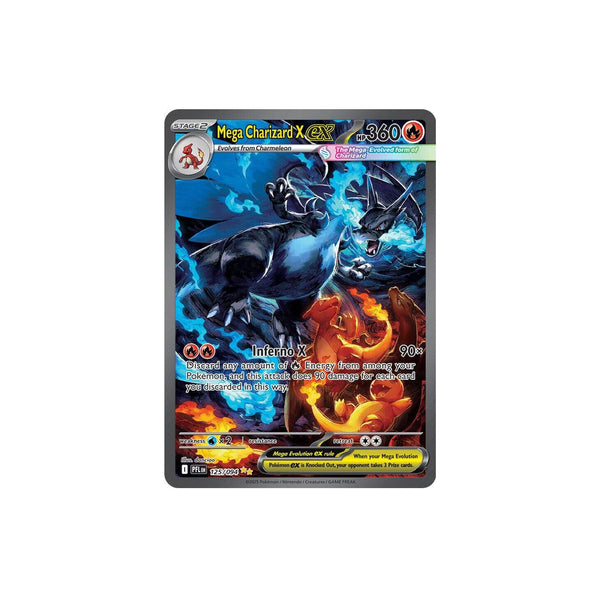
Pokémon TCG Phantasmal Flames Mega Charizard X ex Special Illustration Rare #125 (2025)
Pokemon
Pokémon TCG Fusion Strike Gengar VMAX #157 Holo (2021)
Pokemon
Pokémon TCG ME01-Mega Evolution #146 Marshadow Illustration Rare (2025)
Pokemon
Pokémon TCG Scarlet & Violet Black Star Promo #208 Unova Victini Illustration Collection (2025)
Pokemon
Pokémon TCG Deoxys-EX Team Plasma Full Art Plasma Freeze #111 (2013)
Pokemon
Pokémon TCG ME01-Mega Evolution #188 Mega Lucario ex Mega Hyper Rare (2025)

Pokemon
Pokémon TCG Japanese MBG-MEGA Starter Set Mega Gengar ex #022 Haunter Art Rare (2025)
One Piece
One Piece Card Game #ST01-006 Tony Tony.Chopper Gift Collection (2023)

Pokemon
Pokémon TCG Japanese Vending Series 2 (Red) Machoke (1998)
Pokemon
Pokémon TCG ME01-Mega Evolution #179 Mega Lucario ex Special Illustration Rare (2025)

Continue reading
All stories
Editorial · 4 min
What Is a Slab? Graded Trading Cards Explained
What a graded card slab is, what the label tells you, and the hobby terms every new collector hears first.

Editorial · 3 min
Mega Charizard X ex #125: Phantasmal Flames SIR, Graded by PSA
The Phantasmal Flames Special Illustration Rare of Mega Charizard X ex, graded by PSA and sealed for display.

Jordan · 5 min
The Best Travis Scott Sneaker Releases of 2026, Ranked
From the CJ1 T-Rexx 'Green Spark' to the fragment Air Jordan 1 Low and the pink pack, these are our picks of Travis Scott's latest Jordan and Nike releases.
- Choosing a selection results in a full page refresh.