Worldwide Shipping
Currency


How Card Grading Works: From Raw Card to Slab
Follow a card from the online submission form to authentication, grading, a sealed slab and a cert number you can check online.

In this story
Card grading is the process of sending a raw card to a grading company, which checks that it is genuine, grades its condition and seals it in a numbered, tamper-evident holder collectors call a slab. The grading companies describe the same broad path: an online submission, careful receiving, an authentication check, grading, encapsulation with a printed label, and a certification number anyone can look up online.
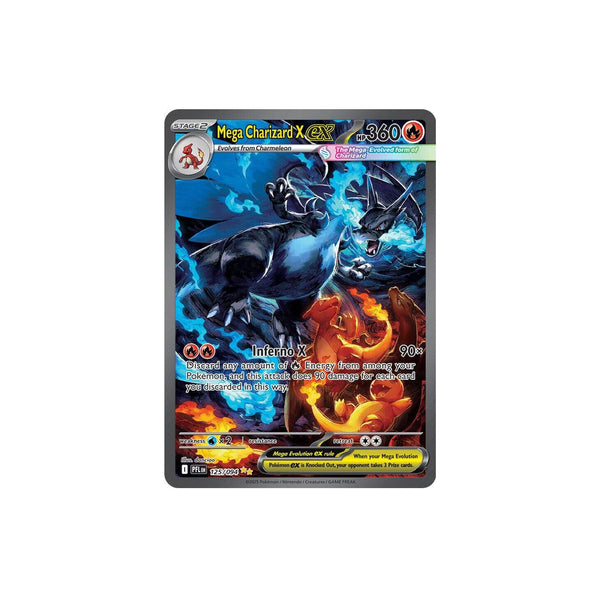
Graded slabs are now live at PUSHAS too, led by the PSA-graded Mega Charizard X ex Special Illustration Rare #125 in the graded cards and slabs collection.
It all starts with the card itself, and the cards inside sealed boxes are the ones collectors send for grading. The Topps Chrome Cactus Jack Basketball Hobby Box 2025-26 is live now in the Topps range at PUSHAS. Here is what happens to a card between the pack and the slab, stage by stage, in the words of the companies that do the grading.
Stage one: preparing and submitting
Submission begins online. PSA directs collectors to its online submission centre, and CGC Cards sets out a short sequence: create an account, choose a service level, complete the online submission form listing the cards, then package and ship them. Each company offers several service levels, which differ mainly in how quickly the order moves through, and PSA's tiers include one called Express. The level you choose is recorded on the form, so it travels with the cards.
Preparation matters because the cards travel by post. PSA's packing guide calls for each card to go into a clear penny sleeve, then into a semi-rigid holder, and it specifically says not to use toploaders, tape or pull tabs. Beckett recommends oversized semi-rigid holders, naming the Card Saver I as an example, with optional penny sleeves, and Cardboard Connection gives the same penny-sleeve-then-Card-Saver advice while warning against toploaders and snap cases. If you are unsure, the packing page of the company you are using is the one to follow.
Stage two: receiving and authentication
When the package arrives, staff open it and account for every card against the submission form. CGC says its submissions are opened under security cameras and checked against the paperwork, then each card gets a unique ID and barcode that tracks it through the process. PSA describes cards being organised by service level at order entry, followed by a research and identification step so the correct details appear on the label.
Before any grade is given, the card is checked for authenticity. PSA says its graders review cards for authenticity and then look for evidence of doctoring, and CGC says cards are authenticated before grading and questionable items are rejected. A card that does not pass is not graded, which is why a returned submission can include cards without a numeric grade.
Stage three: grading, encapsulation and the label
Cards that pass are graded for condition. PSA grades on a scale of 1 to 10, with 10 the top grade, and its graders inspect centering, corners, edges and surface, the same four areas Cardboard Connection lists as the basis of a grade. More than one person looks at each card: PSA says every card is evaluated by at least two graders, and CGC describes grading as a team effort in which multiple professionals reach a consensus.
Next comes encapsulation. PSA seals each card and its label in a tamper-evident plastic holder using sonic sealing, and CGC inserts the card and label into a clear holder. The label is the part you read at a glance: PSA and CGC both print the card description, the grade and a certification number, with PSA adding a barcode and CGC a QR code. A quality check follows, with staff inspecting the card, label and holder before the order moves on. CGC images every card for its online verification tool, and PSA images cards at its higher service levels.
Stage four: cert numbers, verification and return
The certification number ties the physical slab to an online record. PSA offers cert verification on its website and in its app, where you can scan the label or type in the number, and CGC runs a Verify CGC Certification tool on its site. Cardboard Connection suggests checking your returned cards against the packing slip and entering each number into the company's database to confirm the details were catalogued correctly.
Finally, the order is packed and sent back. CGC says encapsulated cards are counted and checked, then packed in a sturdy box with protective materials, and PSA sends a final email with tracking once the order leaves. When the box arrives, try opening it slowly and checking each slab, label and number against your form.
Built for first-time submitters: every stage at a glance
| Stage | What happens | What you see |
|---|---|---|
| Submission | You complete the online form and choose a service level | A submission record in your account |
| Receiving | Staff check every card against the form and assign tracking | An arrival status on your order |
| Authentication and grading | Cards are checked for authenticity, then graded by more than one grader | Order status moving through grading |
| Encapsulation and return | The card is sealed with its label, quality checked and shipped back | A slab with a grade and cert number you can verify online |
Live now at PUSHAS
Stock as of 4 October 2026. Graded slabs, including the Mega Charizard X ex #125 in PSA 10 and PSA 9, sit alongside sealed Pokémon and Topps boxes at PUSHAS. Every item is authenticated by hand, so you can shop with confidence. The live listing shows the current price. Start with the Topps Chrome Cactus Jack Basketball Hobby Box 2025-26.
For more sealed product, browse the full trading cards collection, or read our guide to Elite Trainer Boxes, booster boxes and booster bundles.
FAQ
How does card grading work step by step?
You submit cards through an online form and choose a service level, the company checks them in, checks each card for authenticity, grades its condition, seals it in a tamper-evident holder with a label and certification number, runs a quality check and ships it back.
What should I put my cards in before sending them for grading?
PSA calls for a clear penny sleeve inside a semi-rigid holder and says not to use toploaders, and Beckett recommends oversized semi-rigid holders such as the Card Saver I.
How many graders look at each card?
PSA says every card is evaluated by at least two graders, and CGC describes grading as a team effort in which multiple professionals reach a consensus.
What is the certification number on a graded card?
It is the number printed on the slab label alongside the card description and grade, and you can enter it on the grading company's website, or scan the label in the PSA app, to verify the record.
What happens if a card fails authentication?
A card that does not pass the authenticity check is not graded, so a returned submission can include cards without a numeric grade.
Shop Graded Cards (Slabs)
Pokemon
Pokémon TCG Phantasmal Flames Mega Charizard X ex Special Illustration Rare #125 (2025)
Pokemon
Pokémon TCG Fusion Strike Gengar VMAX #157 Holo (2021)
Pokemon
Pokémon TCG ME01-Mega Evolution #146 Marshadow Illustration Rare (2025)
Pokemon
Pokémon TCG Scarlet & Violet Black Star Promo #208 Unova Victini Illustration Collection (2025)

Pokemon
Pokémon TCG Japanese Vending Series 2 (Red) Machoke (1998)
Pokemon
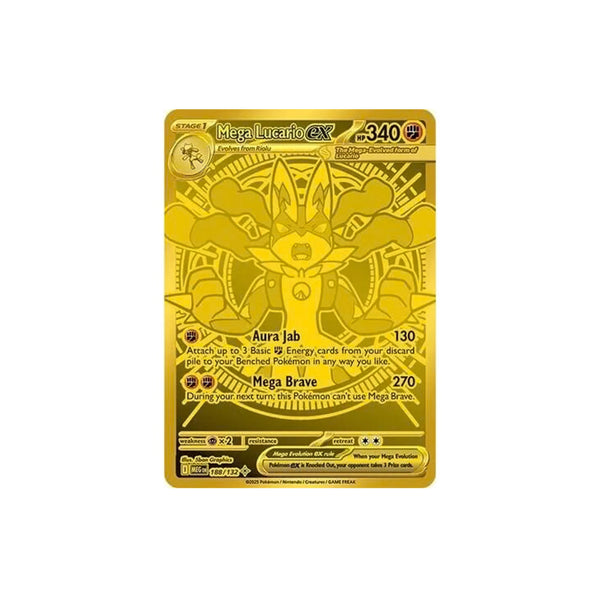
Pokémon TCG ME01-Mega Evolution #188 Mega Lucario ex Mega Hyper Rare (2025)

Pokemon
Pokémon TCG Japanese MBG-MEGA Starter Set Mega Gengar ex #022 Haunter Art Rare (2025)

One Piece
One Piece Card Game Japanese OP13-Carrying On His Will #OP13-120 Sabo SEC Wanted Poster Special (2025)

Pokemon
Pokémon TCG SV10.5-White Flare Victini #172/086 Black White Rare (2025)
Pokemon
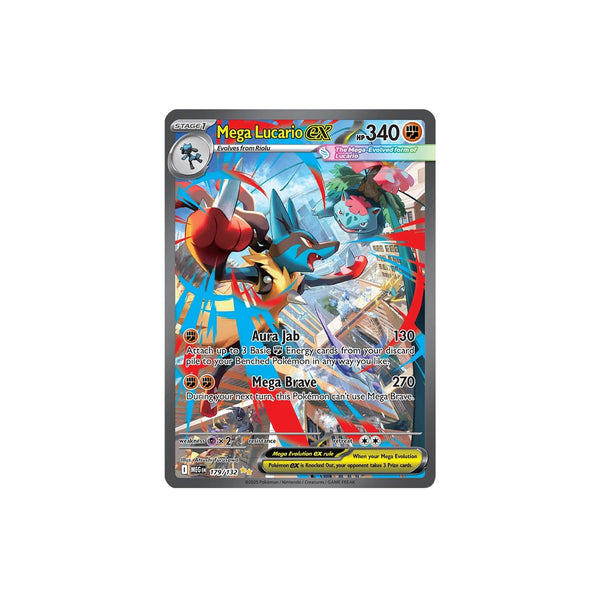
Pokémon TCG ME01-Mega Evolution #179 Mega Lucario ex Special Illustration Rare (2025)

Continue reading
All stories
BAPE · 4 min
BAPE STA #3 M2 and Cross STA: The Three Pairs to Know
Three pairs, one shooting star: the BAPE STA #3 M2 in white and blue, and the Cross STA #1 M2 in black, a sports-shoe-based BAPE model that carries the STA logo.

Collectibles · 5 min
One Piece Card Game Sets and Booster Boxes to Know in 2026
From Carrying On His Will to the Paramount War battles of OP-16 The Time of Battle, these are the One Piece Card Game sets and booster boxes to know.

ASICS · 3 min
ASICS Gel-Quantum 360 I CM 'Aquarium / Safety Yellow': The Story
Colour-shifting Chameleoid Mesh returns on the Gel-Quantum 360 I in Aquarium and Safety Yellow, with circular GEL and FF BLAST PLUS underfoot.
- Choosing a selection results in a full page refresh.